

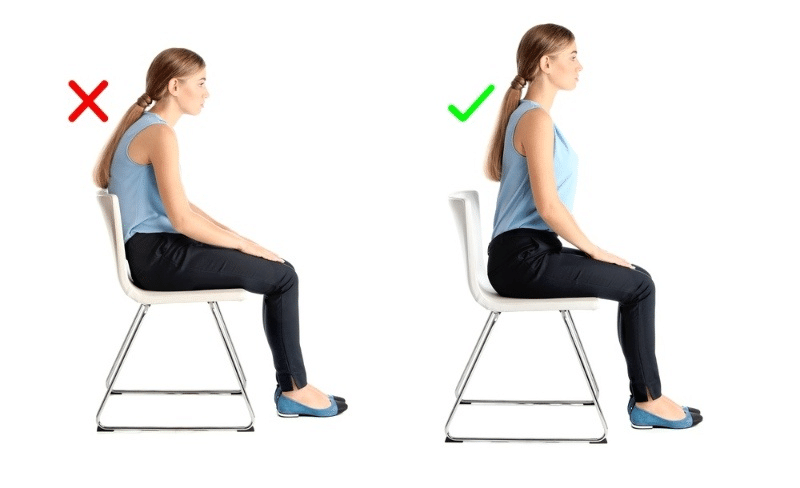
Poor posture has become an unnoticed epidemic of modern life. Spending too many hours at a desk, staring at phones, and leading inactive lifestyles have all contributed to neck, back, and rounded-shoulder pain becoming a common complaint. As a result, a significant amount of the world’s population—nearly 8 in 10 people—will suffer with posture-related problems at some point in their lives, according to global health statistics.
Good news! Improving posture does not involve expensive treatments and extreme workout regimes. Simply incorporate a few very minor daily routines, and you can soon expect to ease your pain and gain better flexibility, greater control over your body posture, and posture correction for desk workers.
In this article, we will look at what good posture involves, why bad posture has occurred, the easy daily habits that improve spinal alignment, and how to improve posture.
Posture means maintaining an upright, neutral position while standing, sitting, and moving. The head, trunk, hips, knees, and feet should be roughly in line with each other, helping your muscles and joints function optimally.
When your posture is correct, your spinal curves should be natural, without undue pressure. It should provide you with good balance, proper breathing, and adequate muscle support. A good posture will ease strain on your lower back and neck. The signs of good posture include relaxed shoulders, a chin parallel to the floor, a straight back, evenly distributed weight, and gently engaged core muscles.
A posture becomes problematic gradually through repetitive lifestyle choices. One of the biggest reasons is the hours spent at a desk, which leads to leaning forward toward a screen. Other lifestyle choices contributing to poor posture are the following:
If ignored over a long period, poor posture can lead to chronic back pain, muscle fatigue, headaches, and reduced flexibility.
Simple daily changes help to realign your body.
Basic exercises can help rebuild and improve your posture, but here is a list of some of the best exercises for better posture:
Absolutely, poor posture's health effects don't just affect your back. It can also put unnecessary strain on your circulation, breathing, and digestion. Over time, this can also add stress to joints and make muscles feel too weak or fatigued. It has also been shown to increase feelings of negativity and decrease self-confidence. Thus, it is essential to maintain good posture and avoid bad posture health effects.
The time it takes to correct posture depends greatly on the consistency and commitment that an individual puts in. Some people will notice that their muscles feel less stiff within weeks, while visible changes in posture will generally take several months, depending on the degree of muscle improvement and the habit's repetition. It is about developing good daily habits rather than seeking instant results, though some wellness platforms, such as drgptmd.com, can provide health guides and resources on posture from the comfort of your home.
Correcting posture has little to do with perfection and more to do with how aware you are of your body's needs each day. Improving your spinal alignment and relieving physical stress are the direct results of adopting a handful of posture-correcting habits. These consist of a mix of sitting and standing with awareness, stretching, strengthening your core, and lessening excessive screen time. Your posture health impacts more than your back—it affects your movement, breathing, posture control, and overall feeling of comfort. Even though your posture may have suffered from slow, repetitive everyday practices, improvements will develop gradually as long as you remain patient and focused. Remember, the most beneficial approach is to keep posture correction accessible and avoid any sense of it being overwhelming.
Yes, bad posture can also cause tension headaches. Forward head posture can put pressure on the neck's muscles and joints, making them too tight and causing pressure headaches. Correcting neck alignment and improving posture will generally relieve these problems over time.
When sitting, you are more likely to slump. Standing and moving for short periods would be better for reducing pressure on your spine and muscles. Standing up and walking for a few minutes at least once per hour should do the job effectively.
Exercise is a key element, but it needs to be combined with daily healthy habits. Incorrect sitting can still negatively influence posture over time, even with regular physical activity. Consistency is what ultimately leads to sustained improvements in posture.
This content was created by AI